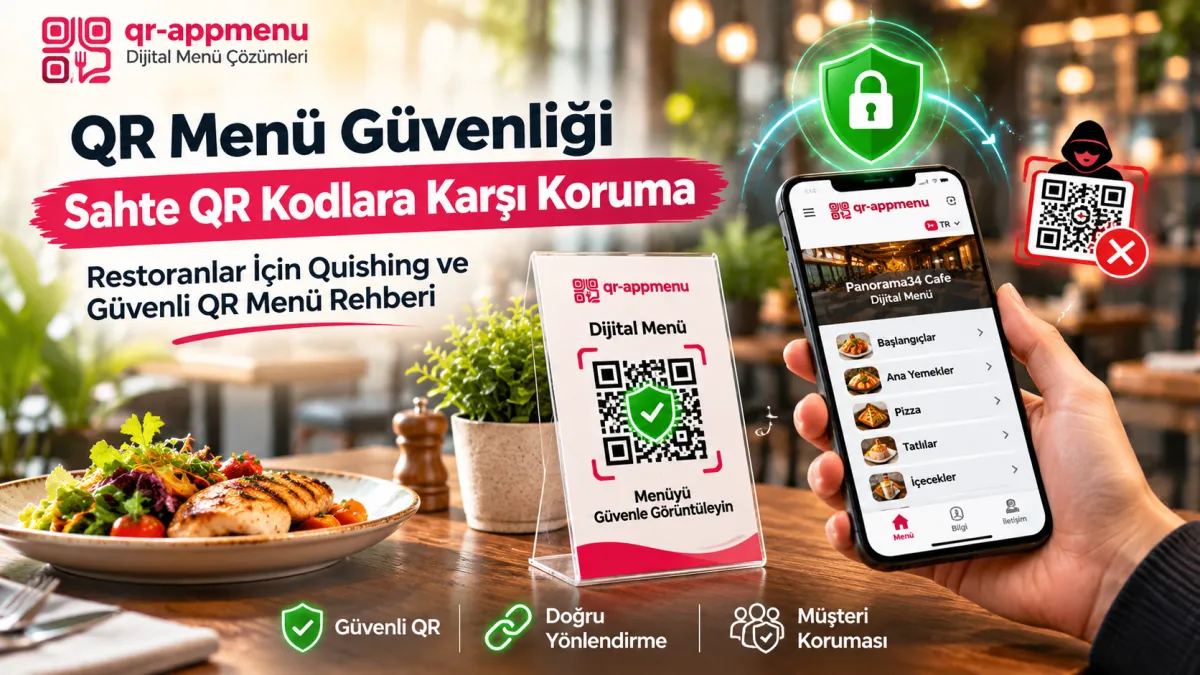
What Is QR Phishing (Quishing)? QR Menu Security for Restaurants
If a restaurant's table QR code is replaced with a link to a misleading website, guests may face quishing (QR-based phishing). Every venue using QR codes can consider this risk. No holder material or software layer guarantees complete protection.
How fake codes are deployed
An attacker may cover the genuine code with a sticker or place a card linking to an imitation domain. A guest might trust the printed card and enter sensitive information on the wrong page, especially when asked to sign in or pay.
Why HTTPS is not enough
HTTPS helps encrypt communication with the site opened in the browser. It does not prove that the site belongs to the venue, and fake sites may also use HTTPS. Check the full destination domain before entering information.
A practical inspection routine
- Inspect table cards for new stickers or overlays.
- Scan codes regularly and verify their final destination.
- Print the expected menu domain on the card.
- Remove suspicious cards and alert relevant staff.
- Protect administrator accounts with strong credentials and suitable access controls.
Where QR AppMenu fits
QR AppMenu provides a digital menu, not a verified online payment or POS service. Checking the destination and inspecting physical cards are separate layers of security. SSL and hosting do not physically prevent an attacker from placing a fraudulent sticker.
Responding to a suspicious code
Remove the card, document the affected table and time, preserve the suspicious address safely, and notify the people responsible for the venue. If customers may have submitted sensitive data, assess suitable support and notification steps.
Checks guests can make
Review the destination shown by the browser and compare the domain with the venue's official details. If a menu unexpectedly asks for card numbers or passwords, stop and confirm with staff. For broader menu usability, see the QR Menu UX Guide.
A workable daily QR safety routine for restaurants
In a QR replacement attack, a criminal places a different destination where the guest expects the restaurant's legitimate code. Looking only for HTTPS is insufficient: a fraudulent site may also have an encrypted connection. The destination domain itself must match the restaurant's approved address.
- Before opening: Staff look for overlays, new stickers, adhesive layers, or unusual printing on table cards.
- Sample scans: Scan codes from different tables and compare the destination domain with the approved menu URL.
- When suspicious: Remove the card from service, offer a verified link, and alert the responsible manager.
- After an incident: Replace affected cards and, if appropriate, notify guests through a trusted channel.
What QR AppMenu can and cannot guarantee
An HTTPS connection to a menu provider cannot stop someone physically replacing a code on a table. Digital menu functionality and physical table-card security are separate concerns. The Turkish data protection authority also describes the QR phishing risk in its quishing guidance.
Conclusion
Reducing QR phishing risk takes physical inspection, domain awareness, and trained staff. Encryption helps with transport security, but cannot confirm a website's legitimacy on its own.
Frequently Asked Questions
How dangerous is quishing (fake QR code scam) for restaurants?
How can fake QR code stickers on tables be identified?
Which materials best prevent quishing on physical table stands?
How does QR AppMenu protect against quishing and data leaks?
What should customers check when scanning a QR menu?
Related Posts